The Websters
We have a weird obsession with Tulsa – The Websters
Brothers Blake and Conrad Webster started playing music together as teenagers in Miami, Oklahoma, before later relocating to Joplin, Missouri. And despite never actually living in Tulsa, Blake says the brothers have always had a “weird obsession” with the city.
Their music has evolved through blues and rock. “Conrad and I started a rockabilly-blues group when we were about 15,” Blake recalls. “On Sunday nights, we listened religiously to Rockin’ John Henry on KMOD’s Smokehouse Blues Show out of Tulsa. We got to know people involved in the program. We were pulled in by the legendary Tulsa musician Glenn R. Townsend to play a local show.” Known for his blues rock, Glenn hosted a tribute to Stevie Ray Vaughan at Cain’s Ballroom that sold out two years in a row. “We were just teenagers then and had no idea how big a deal it was. We just knew it felt great walking onto that stage and playing for a packed house. Since then, it’s been our sole mission to play there again someday.”
While still in their teens, they formed another band called The Victors and moved to Austin, Texas. Blake recalls that on their very first night in town, they met Clifford Antone, owner of the legendary blues venue Antone’s Nightclub, at an IHOP. They were just young guys, and it was late at night when he looked over from his table and asked if they were a band. When they said yes, he simply told them, “Come over and have breakfast with me.” Their chance meeting helped open doors for the young blues band.
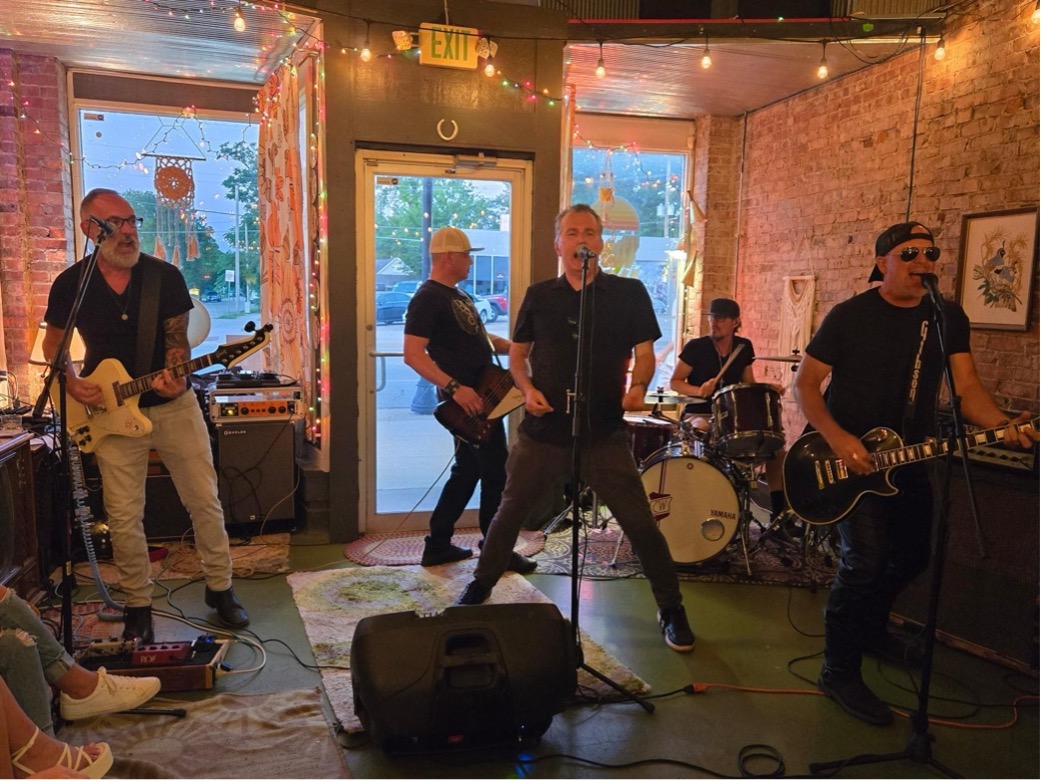
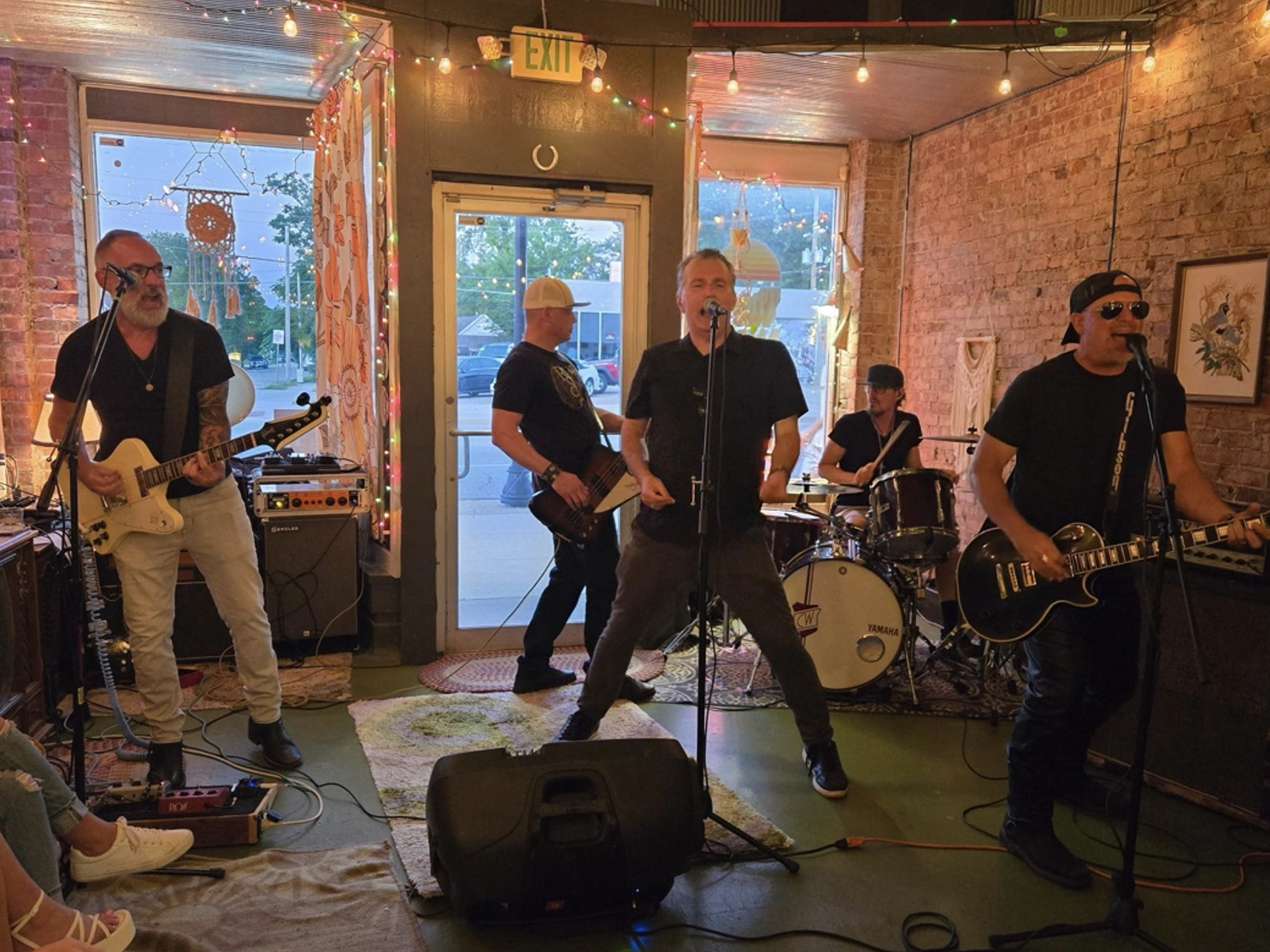
Eventually, Conrad moved to Colorado for a while, and Blake says that left him bandless for about six or seven months. During that time, he started writing songs, “mostly about girls or about being mad at Conrad for leaving.” By 1994, the brothers were back together and determined to recruit the best musicians they could find for a new band, simply called The Websters. One of their favorite local groups, Walking on Einstein, had recently broken up, allowing them to bring in guitarist Brian “Gus” Guodace. The lineup featured Blake Webster on lead vocals, Tim Metcalf on lead guitar and vocals, Troy Cupp on bass, Conrad Webster on drums, and Gus on rhythm guitar and vocals. Their camaraderie is obvious. As Blake says, when Gus is playing that black Les Paul, you’re hearing the literal heart of rock and roll.
Blake describes their current sound as “lyrically driven, open-chord rock and roll”—a mix of introspective storytelling they call “lit-rock.” Influenced by the likes of Tom Petty and Jason Isbell, they’ve focused their recent recording at The Church Studio, as Blake explains, “on being less insufferable and working on the groove.” Blake is quick to praise the studio: “Teresa Knox’s vision is so well thought out and cool; she treats you incredibly well. And working with sound engineers Gary Laney and Mike Prado—well, we can’t even express how great it is in words. We’ve been ‘tracking away’ in the big room and moving fast—we’re set to do the final tracks at the end of June for our new album.”
The band feels the studio’s legacy deeply, especially knowing that Tom Petty’s career ignited in this very spot. After stopping in Tulsa on their way to L.A. in 1974, Petty’s band, Mudcrutch, met Leon and Denny Cordell and signed to Shelter Records, forever linking The Church Studio to rock history. After seeing the story told in the film Runnin’ Down a Dream, Blake finds it surreal to stand in the same “big room” where Petty once stood. “I love being in the spaces where history happened.”
For Blake, music is a truth-seeking process rooted in love—his “center of gravity” that keeps him honest. His band serves as a rare, professional space where men can be both strong and open, using the ritual of songwriting to explore their authentic connections. While his recent work has leaned toward catchier melodies, Blake remains dedicated to music that carries a deeper meaning.
An example of their songwriting creativity, Blake shares, was “Inspired by Teresa Knox’s vision at The Church Studio, I found myself reflecting on the vital legacy of women in music, rock, and songwriting.” This led him to write a song about an aging but vibrant female songwriter, drawing visual inspiration from the dancer in John Singer Sargent’s painting, El Jaleo.
The story came full circle when Blake learned that Gunnar Nelson had donated his father Ricky Nelson’s vintage microphone—the same one used to record “Maggie May”—to the studio. Blake realized this hot mic was the perfect metaphor for his songwriter’s desire to sing her truth and better the world. When he returned to the studio, the engineers let him record with that legendary microphone. “In that moment, the woman in the painting, the spirit of the song, and the band all felt in perfect alignment—anchored by Conrad’s killer groove. And the best part? I got to sing all day about that mic, into the mic!”
Blake jokes that many of their songs mention Oklahoma, specifically Tulsa. Take his track, “Something She Loves About Graceland.” It’s technically about a road trip to Memphis, but the characters get so sidetracked by a long stop in Tulsa—hitting up Cain’s Ballroom and The Outsiders House—that you start to wonder if they’ll ever actually leave. They do eventually make it to Tennessee, but clearly, the heart of the song never really left the 918.
Catch The Websters at Carney Fest 2026. Truth be told, the Websters are definitely more ‘lit-rock’ than ‘high-tech.’ However, they say they are working on it and planning more platforms. For now, find them on Spotify or Facebook.