

The Church Studio Presents CHRIS O’DELL: Abbey Road to Tulsa Time
A New Podcast
Chris O’Dell’s life seems like it belongs in a movie—and it was! She wasn’t simply an Apple Records employee of the Beatles; she was a part of rock history. Imagine being in the recording studio during the creation of The White Album and Abbey Road or joining the chorus of “Hey Jude.” She was present at George Harrison’s house the morning Paul McCartney announced his departure from the Beatles, and she was even one of the four fortunate individuals on the roof for the band’s historic farewell performance in 1969.
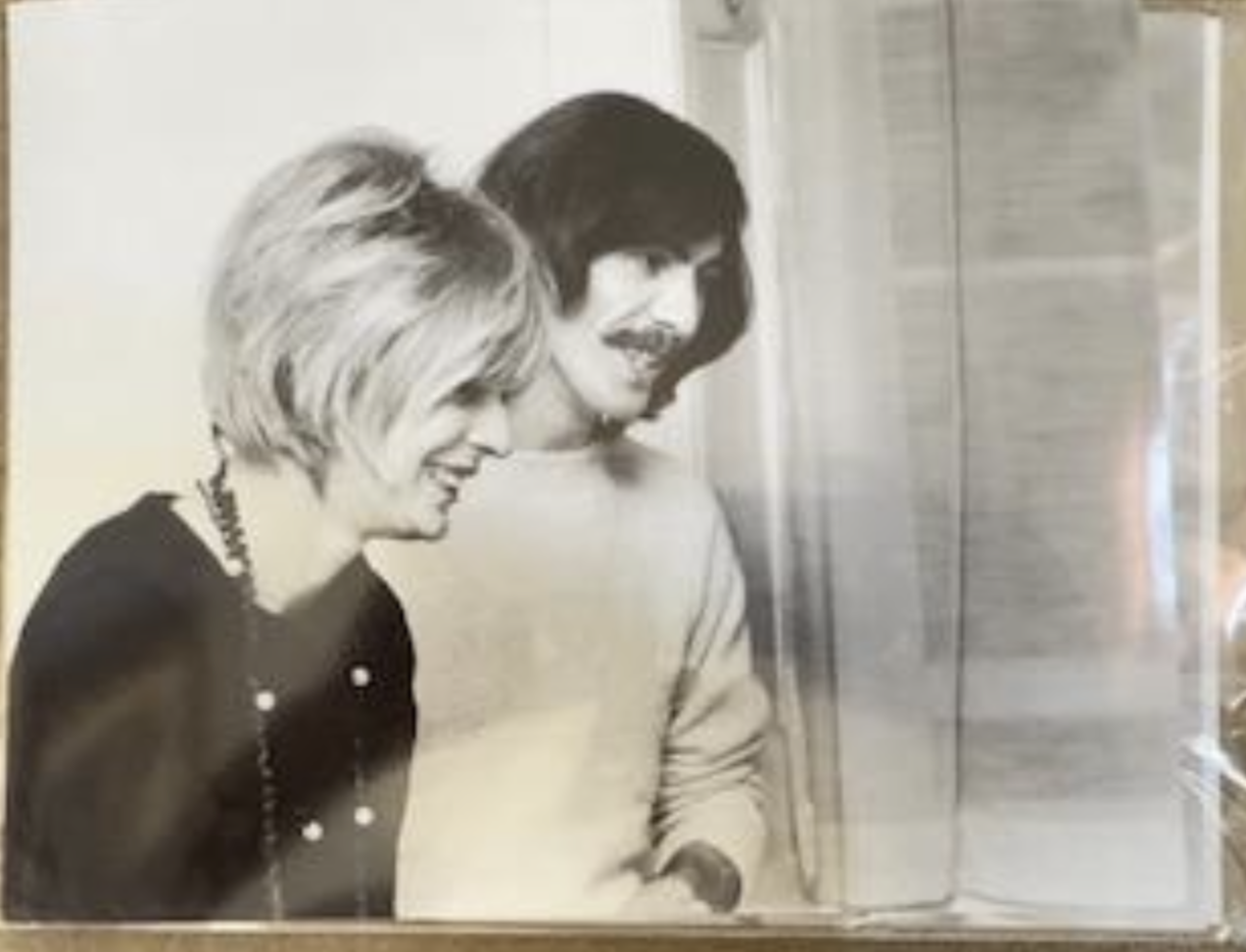
Chris O’Dell and George Harrison, circa 1970
But her life was about more than just the music; she was incredibly close to the people behind the fame. Her friendship with Pattie Boyd was authentic—she lived with Pattie and George at their massive, drafty 120-room estate, Friar Park, and was there for Pattie through all the drama of her marriage and her relationship with Eric Clapton. She was so much a part of their world that Ringo Starr and Pattie Boyd even became godparents to her son, William. She shared a deep spiritual friendship with George Harrison, who immortalized her in his song “Miss O’Dell.”
O’Dell was recruited to work at Apple Corps Ltd. by Derek Taylor, the legendary press officer for The Beatles. The two met at a party in Los Angeles in early 1968 while Taylor was visiting from London. After they became fast friends, Taylor invited the 20-year-old O’Dell to move to England and join the newly formed multimedia company where she worked closely with A&R head Peter Asher and did indeed Meet the Beatles.
While working at Apple Records, in 1969, O’Dell met Leon Russell through producer Denny Cordell. Cordell brought him in to meet Taylor, who wasn’t in the office at the moment, so he introduced him to O’Dell. She reminisces, “At the time George was looking for a piano player, so I called him and said, ‘Leon Russell is in town; do you want me to find out if he’ll play on a Jackie Lomax session?’ He agreed, but that session never happened because George’s mother got sick.” When Russell first asked O’Dell to dinner, she was hesitant; despite thinking he was nice, she was perfectly happy with her life at Apple Records and wasn’t interested in getting involved with “some guy from Oklahoma.” She admits that she was actually a little scared of him and his piercing eyes.
“He asked me out again to a movie and a few other things, but I eventually ended up standing him up. I felt terrible about it, so I waited a bit and then called him. He told me he was leaving to go back to L.A. because he couldn’t find a good drummer. When I asked what kind of drummer he was looking for, he said, “Ringo.” Later that day, George was in my office, and I told him about the conversation. He said, “I can get Ringo as long as I can play on it too. ” I put them on the phone together to work it out.” They ended up recording “Pisces Apple Lady,” a song about O’Dell herself.
“Leon asked me to move back to L.A. with him. I had never lived with anyone before; I was only 23, and he was 28. I was totally ill-prepared for being someone’s ‘old lady’ for those four months. Denny and Leon didn’t have much for me to do. Shelter was strictly an office, and all the recording was done at the house. Eventually they sent me out to find a permanent building for Shelter Records. I found a place near Hollywood Boulevard; it wasn’t the greatest area, a bit out of the way, but it looked like a decent old house, and it reminded them of Oklahoma. They absolutely loved it.”
“Leon had told me he had a ‘junior executive’ home on Skyhill Drive in the Hollywood Hills. It was a nice two-story place, but I didn’t realize it was basically a recording studio where two other couples lived, and Jimmy Karstein lived in the closet! Leon had aluminum foil over the bedroom windows to keep it pitch black, but I’d been in England and craved the sunshine. I ended up moving bedrooms around.”
“He had finished his Leon Russell album and was looking to do more in L.A. People just hung out constantly—especially the Oklahoma crowd. The house was always full of musicians like Jesse Ed Davis, Carl Radle, Bobby Whitlock, and Chuck Blackwell. Jim Keltner would stop by, but I didn’t really get to know him until later when I was a tour manager. We’d have beers and drinks around, but I didn’t really cook; it wasn’t my thing. We just ordered pizza, hit the diners, or went to a hot dog stand he really liked. He was always looking for a taste of Oklahoma in LA. driving around in a Rolls-Royce he’d brought from London.”
O’Dell saw Leon’s life as a gathering of people who lived on the fringes. He simply liked the circus—the loud, the eccentric, and the ones who stood out. To Leon, this rowdy group wasn’t just a crowd; they were the family he chose to keep his days from ever being predictable and inspired his creativity.
“It wasn’t lonely, per se, but looking back, I realize I’m a more serene person who needs her own space. There were always things happening and people around. When I found myself picking up a paint-by-numbers set, I knew I had to get back into the action, especially since Denny and Leon didn’t have anything for me to do there. I eventually went back to Apple, but he’d come to visit me from time to time, and we stayed in touch—even during the periods when he wasn’t doing much.”
She remembers Leon Russell’s career shifted into high gear in the early ’70s, starting with his role as the mastermind behind Joe Cocker’s 1970 Mad Dogs & Englishmen tour. Shortly after his performance at George Harrison’s Concert for Bangladesh in 1971 and participation in the live triple album, Russell earned a Grammy Award for Album of the Year. By 1972, Russell returned to his roots by moving Shelter Records to Tulsa and opening the historic Church Studio. Under his leadership, the studio became a creative family hub that fueled the Tulsa Sound with JJ Cale, produced the GAP Band, launched icons like Tom Petty and Phoebe Snow, and revitalized the careers of legends like Freddie King. Around 1975 they drifted apart; she explained, “He was heavily into his country persona, ‘Hank Wilson.'”
“We eventually reconnected,” she explained. “I knew he wasn’t doing much, but it surprised me. He had every opportunity; musicians loved him. I read he was bipolar, but I don’t know if that was true. But he had a complex personality with intense highs and lows.”
From her early days at Apple Records to her work with Bill Graham—the architect of the modern concert industry—Chris O’Dell was among the first women to navigate the male-dominated field of rock-and-roll tour management. O’Dell managed the logistics for the Crosby, Stills, Nash & Young 1974 reunion tour, a project she describes as her most challenging due to the friction between four distinct artists who functioned more as individuals than a cohesive band. In contrast, she found working for Bob Dylan to be a seamless experience, notably overseeing the logistics of his Rolling Thunder Revue. Throughout a career managing tours for icons like Queen, the Rolling Stones, Led Zeppelin, Santana, and Linda Ronstadt, O’Dell maintained a reputation for professional integrity, earning the respect of the artists she managed while keeping clear boundaries in a demanding industry.
While the 60s and 70s rock scene is often seen as a “boys’ club” where women were sidelined, O’Dell’s experience was the opposite. She wasn’t a bystander; she held a real, high-pressure job and stayed in control of her own life. Despite the massive fame of the people around her, she felt like a respected professional and a true peer, rather than just an assistant or a fan.
After nearly two decades managing the intense egos and excesses of rock royalty, O’Dell retired from the music industry to reclaim her own life. Drawing on the “on-the-job training” she received while navigating the turbulent world of bands like the Stones and Zeppelin, she moved back to Tucson and earned a master’s degree in counseling. She spent the next 20 years as a licensed substance abuse counselor, using her firsthand experience with the era’s drug culture to help others find a path to recovery.
She married English aristocrat Anthony Russell (the Honorable Anthony John Mark Russell, son of the 4th Baron Ampthill) in 1985. They had a son named William before divorcing. Then she married Morrise Luckey, a fellow counselor. William was very close to his stepfather, whom he credited with raising him and treating O’Dell with immense respect. “My late husband, Morrise, and I spent seven years traveling during our retirement, a journey that eventually shifted into the long, difficult reality of his dementia,” O’Dell explained.
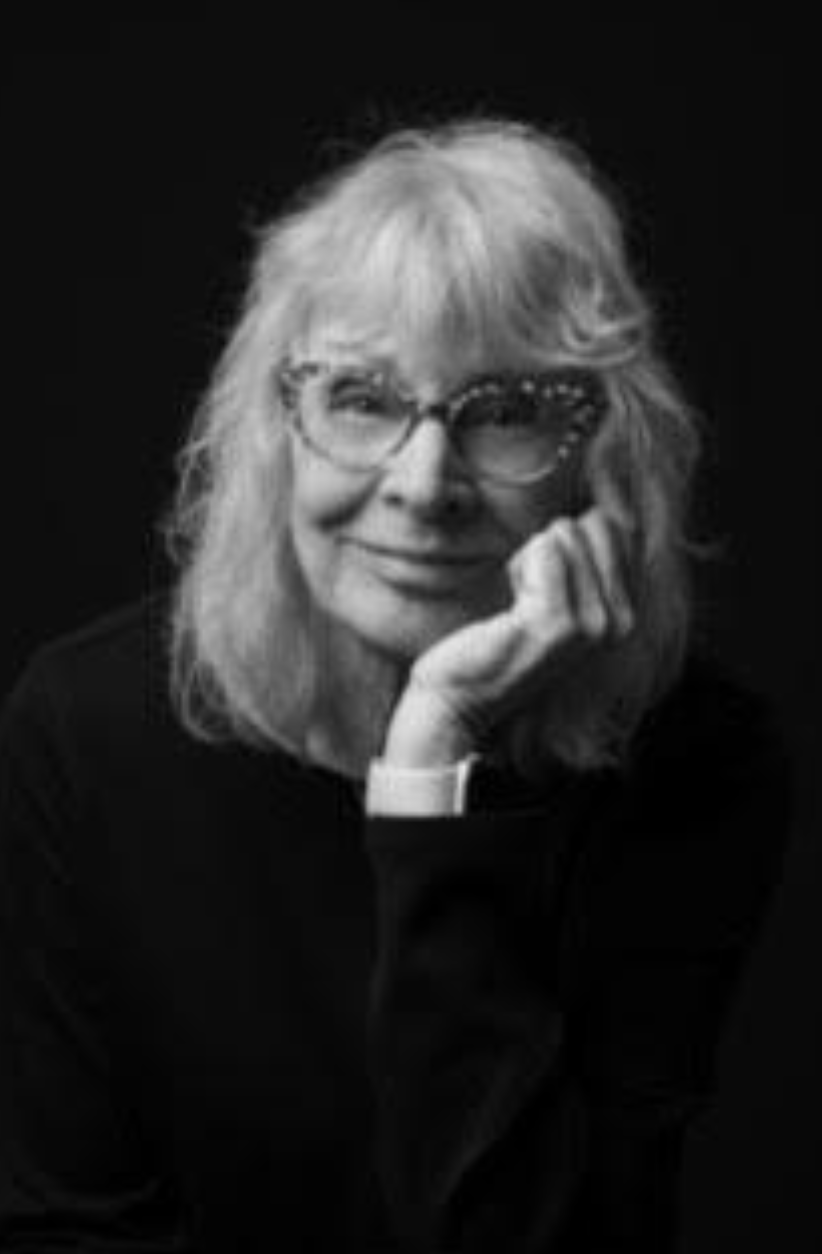
Miss O’Dell
Having grown up in small towns—Owasso and Keota—before moving to Tucson (where she finished high school before moving to L.A.), O’Dell considers Oklahoma a defining part of her identity. Her move to Tulsa is a heartfelt return to the place her father, an Indiana native and Owasso basketball coach, loved most. Her parents are laid to rest at Fort Gibson National Cemetery. She is eager to re-immerse herself in the community and share the stories that connect her back to Oklahoma and her amazing rock-and-roll life.
“When my house sold before it even hit the market, the decision was made for me,” she says. “I’m here because this is where the momentum is leading.” Joining her in this new chapter is her boyfriend, Jim Travis—a veteran promoter and Tucson Musicians Museum inductee—who moved to Tulsa to spearhead the podcast’s promotion and sponsorship efforts.
Teresa Knox invited O’Dell to lead an intimate event at the studio on October 4, 2025.
The event was designed for Beatles and rock history fans, featuring a Q&A session and a book signing for O’Dell’s memoir, “Miss O’Dell: My Hard Days and Long Nights with The Beatles, The Stones, Bob Dylan, Eric Clapton, and the Women They Loved.” Knox, who purchased and restored the historic studio originally established by Leon Russell, organized the appearance as part of her effort to honor the “unsung heroes” of music history—specifically women like O’Dell who were key witnesses to rock’s most legendary eras.
“Standing in that Church Studio, it hit me how deep my roots here actually go. I’m still in touch with my best friend from fourth grade, and another close friend from Keota, OK, is still in my life. After years in Tucson, I just knew it was time for a change. My friend Teresa suggested a podcast, which was already on my mind, a natural next step after two decades in the music business and a second career as a therapist. Now, I’m focused on a new chapter in Tulsa—getting behind the mic to share the stories I’ve gathered along the way.”
On May 19th, the Church Studio will launch Chris O’Dell’s “Abbey Road to Tulsa Time” podcast, an inside look at the life of the legendary woman who inspired songs by George Harrison and Leon Russell. The series features stories from industry insiders like the Beatles’ former hair stylist Leslie Cavendish (who claimed John Lennon would be bald) and horn player Tom Scott, ensuring the Tulsa Sound and Leon Russell’s legacy stay alive and fresh for a new generation. If you’re a fan of the stories behind the songs, this is your backstage pass to rock and roll history.